
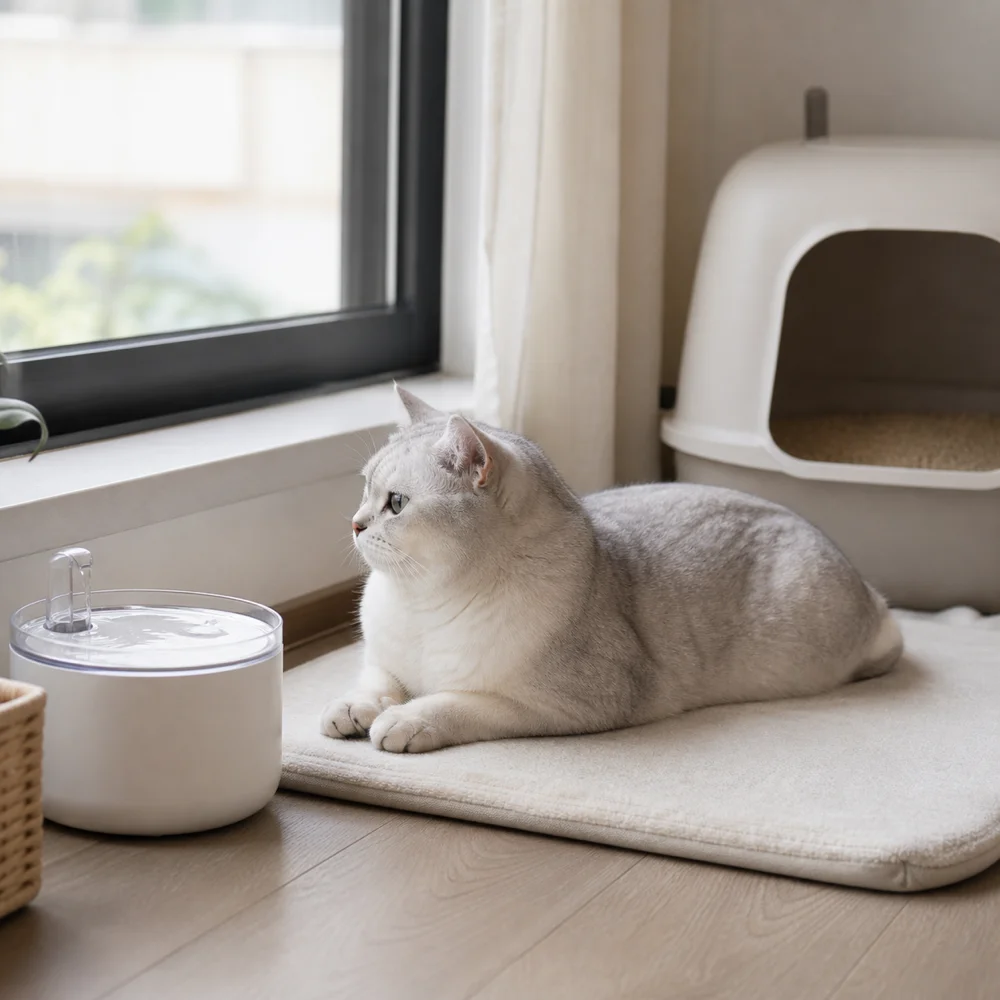
I always thought there would be obvious signs when a cat is sick. For example, not eating, having a fever, losing weight, and screaming a lot. But my cat that I had raised for 5 years suddenly started to enter the litter box frequently on a very ordinary night. It squatted and stood up again. Come out and walk around, then go in again. There are almost no urine clumps in the litter box. At first I thought it was just constipation, or a bad mood. It wasn’t until it started licking the urethral opening, lying still on the ground, and its eyes became very tired, that I realized: this is not a small problem. After arriving at the hospital, the doctor said two words: anuria. At that moment, I realized that the cat’s inability to urinate was not a matter of “just bear with it”, but an emergency.
Why is anuria so scary?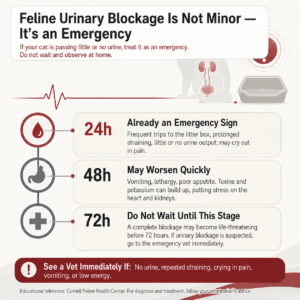
Cat anuria means that the urethra is blocked and urine cannot be discharged. Common in male cats, especially neutered males, because their urethras are thinner and longer. When urine cannot be discharged, the bladder will become more and more distended, the kidneys will not be able to discharge metabolic wastes normally, and electrolytes will be disordered. In severe cases, vomiting, weakness, coma, and even death may occur. Foreign veterinary information has repeatedly emphasized that if a cat has complete urethral obstruction, death may not be “a few weeks later”, but measured in hours. The Cornell Feline Health Center mentions that cats may die within 24-48 hours after complete anuria; the Merck Veterinary Manual also states that complete anuria can develop uremia within 36-48 hours and may die within about 72 hours. This was also the last thing I was afraid of. I thought it was just an abnormal urination, but for it, it may have been a countdown to life.
I reviewed it later: there may have been signs of the problem already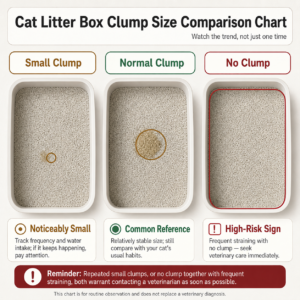
Looking back, I can see that it actually reminded me a long time ago: it doesn’t drink much water. The urine ball in the cat’s litter box has become smaller.
He occasionally pees outside the litter box. I thought it was because the cat didn’t like the litter, was in a mood, and urinated in revenge. Now I know that many so-called “cats are not well-behaved” may be because they are uncomfortable. Cats don’t say “I have pain when peeing.” It can only tell you through behaviors such as frequently entering and exiting the litter box, licking the urethral opening, hiding, barking, urinating, and not eating: There is something wrong with me.
To prevent anuria, you can’t just rely on the phrase “drink more water”. After the doctor reminded me, the first thing I did was to recheck the pet supplies at home.
I used to think that drinking fountains and cat litter boxes were just “daily necessities”. Now I prefer to think of them as part of cat health management.
1. Water dispenser: Make cats willing to take the initiative to drink water. Cats may not necessarily like to drink still water by nature.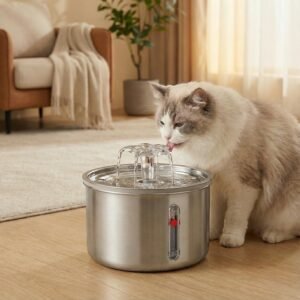
Some cats prefer running water. The meaning of the water dispenser is not to be “advanced”, but to increase the chances of cats coming into contact with water and being willing to drink water. When choosing a water dispenser, I now look at these: The material should be stainless steel, ceramic, or food-grade materials that are easy to clean. The easier the structure is to disassemble and wash, the better. Don’t have too many dead corners that hide dirt and evil. The sound of the water pump should be low. If the cat is timid, it will be directly persuaded to leave if it is too noisy. The capacity should be sufficient, but bigger is not always better. The key is to keep it fresh. The filter element should be replaced regularly and the machine body should be cleaned regularly and thoroughly. What’s more, don’t just put in one drinking point. Water bowls or water dispensers can be placed in the living room, bedroom, or places where cats often stay. If the cat drinks less water, you can also discuss with your veterinarian whether to increase wet food, staple food cans, freeze-drying and rehydration, etc., to increase daily water intake.
2. Cat litter box: It is not only a toilet, but also a health monitor. The cat litter box is the easiest place to detect early signs of urinary obstruction.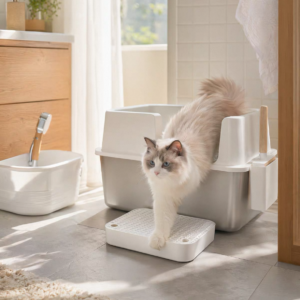
I now look at three things every day: Are there any urine lumps today? Is the urine ball larger or smaller than usual? Does your cat frequently go in but can’t urinate out? It is recommended that the cat litter box follow the “number of cats + 1” principle. For example, for a cat, it is best to have two litter boxes. This is especially important in multi-cat households. If the litter box is not enough, the location is too noisy, or it is too dirty, it may cause the cat to hold back its urine or become stressed. When choosing a cat litter box, my first priority would be to have enough space to at least allow the cat to turn around freely. The entrance should not be too high, especially for fat cats and elderly cats. Try to place it in a quiet, safe place without being disturbed.
Shovel poop every day and clean the entire basin regularly. Do not change cat litter frequently and suddenly, and be careful with cat litter that is too fragrant or dusty. If budget allows, a smart litter box or urine monitoring device can be an aid but not a substitute for observation. The machine will report the number, and the person should check the cat’s status.
What you should really buy is not the “most expensive” one, but the one that makes your cat less likely to hold back his urine, become less nervous, and drink more water.
After going through this, my perspective on pet products has completely changed. The water fountain is not a decoration. You can’t just buy a cat litter box and use it. Cat litter is not just about deodorizing and clumping. What they jointly affect is: whether the cat is willing to drink water, whether it is willing to go to the toilet, and whether the owner can detect abnormalities in time. Of course, preventing anuria cannot just rely on changing supplies. Diet, weight, stress, urinary system constitution, and crystal or stone problems may all be involved. Cats that have experienced anuria need to follow the doctor’s instructions for review, diet adjustment and environmental management. But for ordinary cat-raising families, what they can do immediately is actually very specific: put in more drinking spots. Increase the proportion of wet food. Observe urine masses daily. Keep the litter box clean. If your cat suddenly goes to the toilet frequently, be sure not to drag it away. If you find that you can’t urinate, go to the hospital immediately.
I always thought that cats are still young, only 5 years old, and nothing big will happen to them suddenly. But the urinary obstruction made me understand that sometimes the danger to cats does not come slowly, but suddenly. It may have been eating, acting coquettishly, and chasing toys one day, but the next day it went to the emergency room because it couldn’t urinate.
So this article is not intended to create anxiety, but to remind every cat owner:
Please take a good look at the litter box.
Please think carefully about how much water it drinks every day.
Please don’t treat frequent squatting on the toilet as a minor problem.
Some regrets can really be avoided a little earlier.

Written by
wangt9921@gmail.comContent team at Younihao Technology -- sharing industry insights on pet product manufacturing, OEM/ODM solutions, and global market trends.