
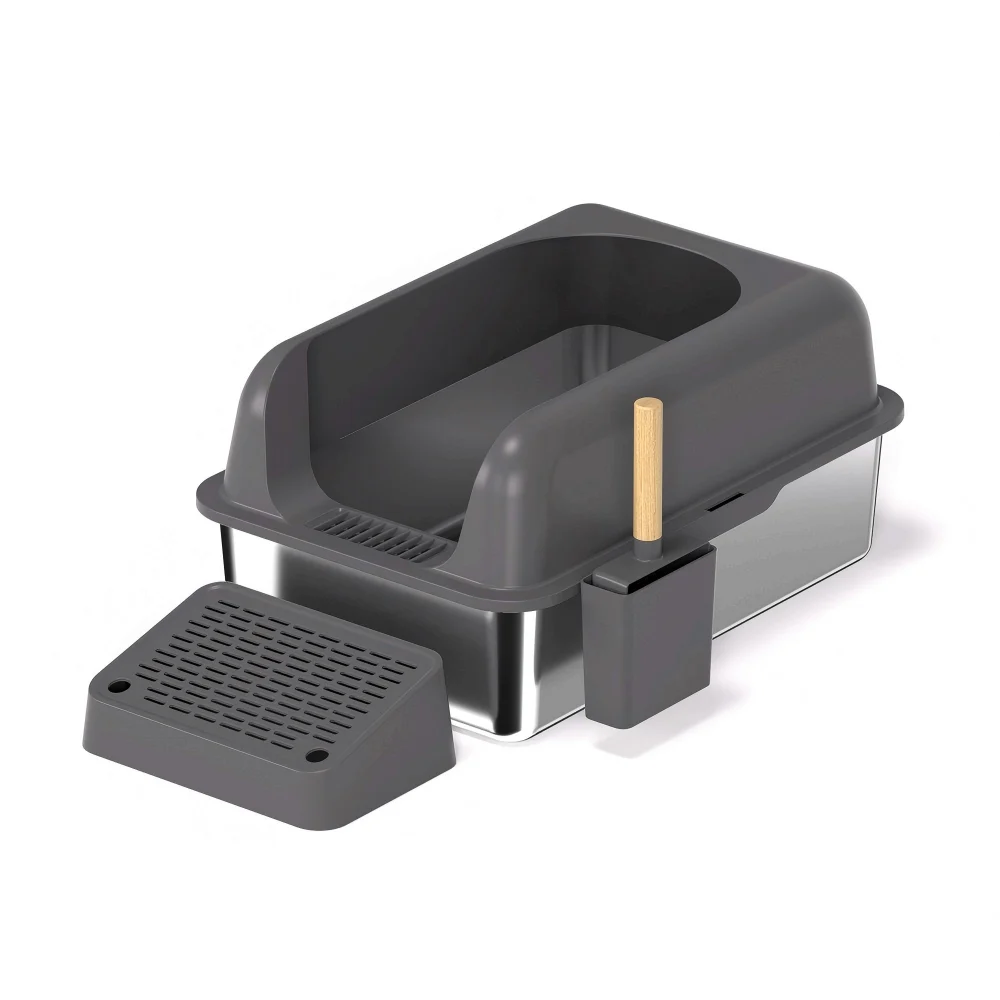
Which format should a wholesale buyer shortlist?
Start with the product structure and your intended assortment. For open-top models, review the tray, entry height and surrounding space. For enclosed models, also review how the enclosure opens and how the tray is removed. Planter-style and powered configurations add their own component, packing or operating questions. There is no single format that establishes the right specification for every order.
This guide is a product-selection checklist for importers, distributors and private-label brands. Use it with the exact model specification and a sample review. Appearance alone does not establish material grade, odor-control performance or suitability for a particular cat.
Compare the formats by what you need to check
| Format | Inspect on the selected model | Confirm in the quotation |
|---|---|---|
| Open-top and high-sided | Entry height, rim finish, tray dimensions and the footprint with any step fitted. | Tray and enclosure materials, included scoop or step, dimensions and packing arrangement. |
| Enclosed and drawer | Entry and exit positions, tray removal, drawer fit and access to interior surfaces. | Included components, assembly method, replacement-part arrangements and packing configuration. |
| Planter-style | Overall enclosure size, tray access and how decorative parts are installed. | Tray and decorative components, assembly instructions and protection of separate parts in the carton. |
| Powered configuration | The actual powered module, controls, connections and cleaning access around powered parts. | Power supply, operating instructions, applicable model documents and agreed support terms. |
1. Separate product dimensions from usable space
Ask what each measurement describes. Overall dimensions, the internal tray area, the entry opening and the footprint with accessories fitted answer different questions. An external length does not establish the interior space available. Packaging dimensions are another measurement and should be confirmed separately.
On our product pages, listed dimensions use length × width × height in centimetres. Where your retail listing needs an entry height, internal tray measurement or assembled footprint that is not listed, request it for the exact model instead of calculating it from a photograph.
2. Review access and component fit on a sample
Make a short sample-review sheet. For an open model, record the entry profile, edge finish and fit of the supplied accessories. For an enclosed model, also record how the top or drawer is removed, where the parts connect and how the user reaches the tray.
Use the proposed assembly and care instructions during the review. Record any question about fit or access with a photograph and the model reference. Agree on required changes and acceptance criteria before treating the sample as the reference for a bulk order.
3. Distinguish included accessories from optional combinations
A product image can show a scoop, holder, step, mat or decorative item. Ask the supplier to list exactly what the quoted unit includes. If an accessory is optional, request its model, quantity and packing arrangement separately. Confirm compatibility rather than assuming that one step or scoop fits every litter box.
This distinction matters when comparing supplier prices: two quotations using similar photographs may describe different component sets. Compare the confirmed configuration and packaging alongside the unit price.
4. Treat powered functions as model-specific
A fan or other powered module does not by itself mean that a product cleans automatically, weighs a cat, uses sensors or supports an app. Request the operating instructions and a written function list for the selected configuration. Confirm the power supply and any documents relevant to that model and destination.
For a more detailed review, use our powered-model supplier checklist. Do not apply one product’s documents or performance statements to another model.
5. Build a shortlist that is ready for quotation
Select two or three models and send the supplier the product links, quantity by model, destination country, branding requirements and target delivery date. Keep open questions alongside each model so the reply can address them directly.
Use the product finder and comparison tool to review our current range. MOQ is 300 units; confirm quantity allocation across a proposed assortment in the quotation. Production is 15–25 days after order and project details are confirmed. Sample preparation and shipping transit time are separate.
For logo, packaging and project planning, see our OEM and private-label page. You can also send a model-selection inquiry with your shortlist.

Written by
YounihaoContent team at Younihao Technology -- sharing industry insights on pet product manufacturing, OEM/ODM solutions, and global market trends.