
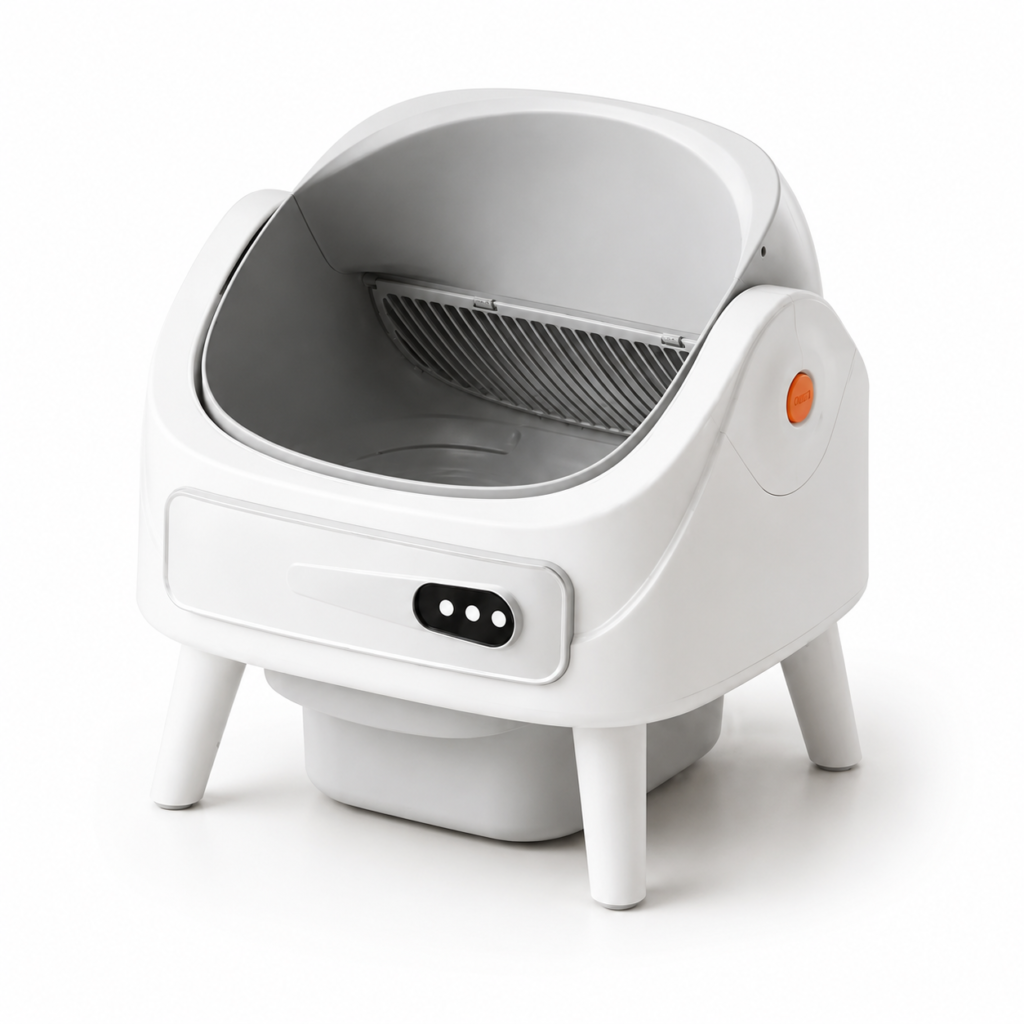
Quick answer: how should you evaluate a supplier?
Evaluate a smart cat litter box manufacturer by checking the exact model specification, reviewing a sample, confirming software functions, checking market documentation, approving packaging and agreeing on after-sales support. Use written evidence for the quoted configuration before placing an order.
Buyer checklist: model-specific documents, a reference sample, confirmed functions, destination-market review, approved OEM artwork and written support terms.
Choosing a smart cat litter box manufacturer requires more than comparing a product photograph and a unit price. Importers, distributors and private-label brands need a specification they can verify, a sample they can approve and a clear process for handling changes after the order.
This checklist helps B2B buyers structure those conversations before committing to a purchase. It is a sourcing workflow, not a claim that every model offers the same functions or holds the same approvals.
1. Define the exact model before comparing quotations
Send each potential supplier the same requirement sheet. Identify your destination country, sales channel, planned order quantity and preferred design. Ask the supplier to return a dated specification for the exact model and configuration being quoted.
- Model identifier and product revision.
- External dimensions, entry dimensions and net weight.
- Materials for the housing, litter-contact surfaces and removable parts.
- Power supply, plug and included accessories.
- Supported litter types and the manufacturer’s stated use restrictions.
- Packaging dimensions, gross weight and units per carton.
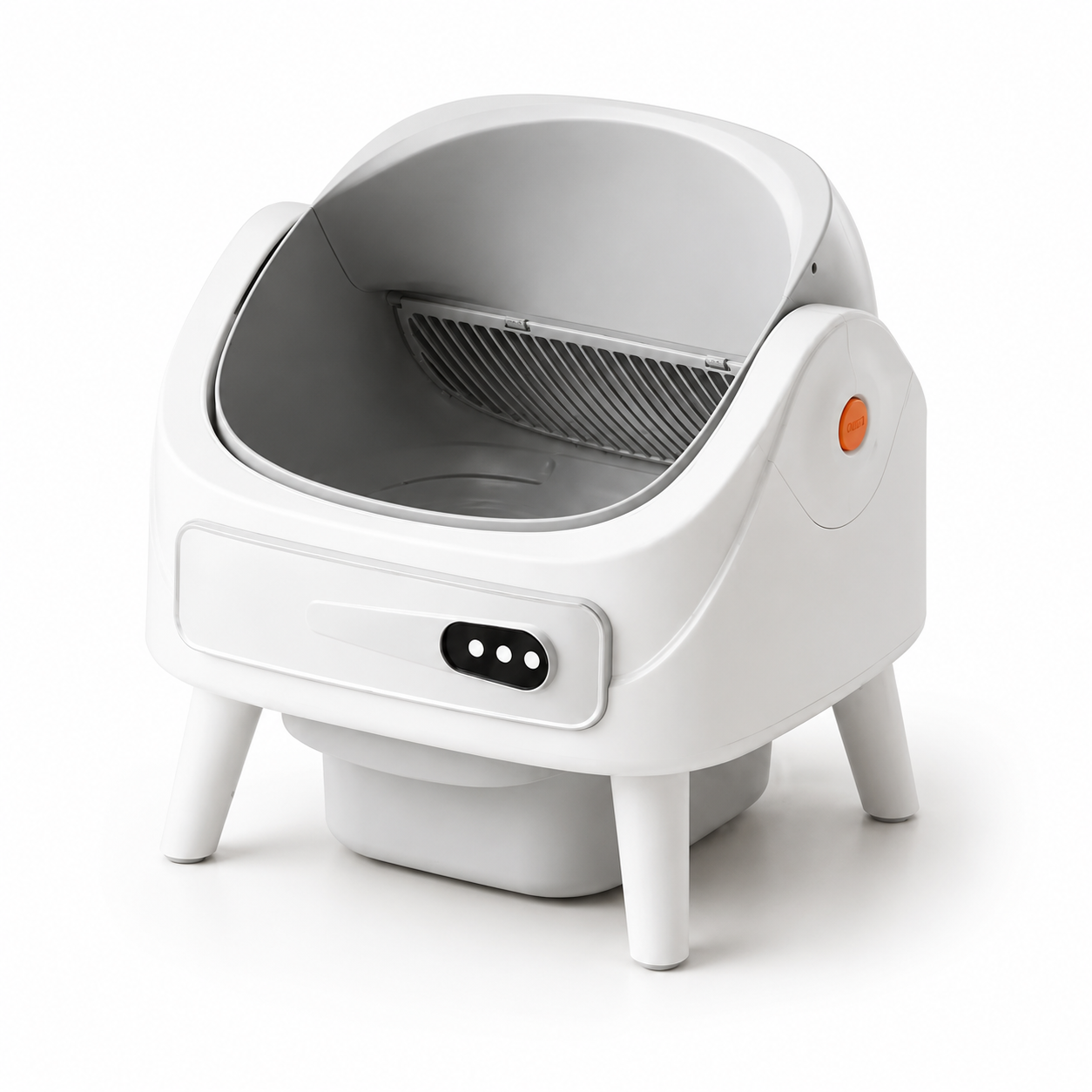
Two products with similar shells may use different electronics, cleaning mechanisms or accessories. Treat a photograph as a starting point for identification; do not transfer specifications from a visually similar listing.
2. Build a sample review around normal use and maintenance
Check the documented operating sequence
Ask the supplier to demonstrate setup, normal operation, fault indications and the documented response when operation is interrupted. Request the operating manual before the sample arrives so your reviewers can follow the same instructions as a future customer.
For products with moving parts, ask which safeguards are included in the quoted version and what evidence supports their intended operation. Do not use live animals to test a suspected fault or defeat safety controls. Agree on an appropriate review procedure with the manufacturer and a qualified testing partner where needed.
Evaluate cleaning and replacement tasks
Review how the user removes waste, replaces consumables and accesses removable parts. Confirm which components can be washed and which must remain dry. Record ambiguous instructions, difficult assembly steps and missing accessories as specific issues to resolve before sample approval.
3. Verify connected functions separately
If an app is offered, confirm that it belongs to the configuration in your quotation. Request the app name, supported phone systems, network requirements, available languages and a description of the functions that work without a network connection.
Ask who maintains the app, how support requests are handled and how users can manage their accounts and data. An app screenshot alone does not establish that the supplied model supports every function shown.
4. Request documentation for the intended market
Ask for documentation that identifies the exact model, manufacturer and configuration, and have a competent compliance specialist check its relevance to your destination market. A report for a different model or component may not establish the status of the finished product.
The European Commission’s official CE marking guidance explains that CE marking applies to products covered by relevant EU rules; it is not a general quality award. Determine the applicable requirements for your particular product rather than treating a logo as sufficient evidence.
For Middle Eastern destinations, identify the specific importing country and confirm the documentation, labelling and local conformity route with the relevant authority or a qualified adviser. Do not assume one destination’s paperwork automatically covers another.
5. Put OEM details into the approved specification
Separate cosmetic customization from changes to the product’s functions. Record approved colors, artwork files, packaging layout and manual language. If a proposed change affects components or operation, ask the supplier to explain its effect on the sample, documentation and quotation.
For our smart cat litter box inquiries, the confirmed minimum order quantity is 300 pcs. Available customization discussions include colors, color-box packaging and instruction manuals. Confirm the exact model, artwork scope, quotation and production terms with our team before ordering.
6. Agree on production acceptance and after-sales support
Keep an approved reference sample and a revision-controlled requirement sheet. Agree in writing on the inspection scope, acceptance criteria, packaging checks and process for approving substitutions. Request a production schedule for your actual order rather than applying the lead time from a different project.
Before shipment, clarify the warranty terms, evidence required for a claim, spare-part availability and responsibility for freight or replacement costs. Ask how the supplier identifies a production batch and communicates a product change. These questions make future support discussions more specific.
Frequently asked questions
Can I choose a smart litter box from a picture alone?
A picture can identify a design you like, but it cannot confirm dimensions, capacity, software, safeguards or compliance. Obtain model-specific documents and review a sample before approving an order.
What should I include in my first inquiry?
Include your target country, buyer role, preferred design, quantity, sales channel, packaging language and required customization. List any functions that are essential so the supplier can confirm them explicitly.
Should I use the same checklist for a stainless steel litter box?
The specification, sample and packaging steps still help, but the product-specific questions differ. For a non-powered product, see our stainless steel litter box OEM buyer’s checklist for a separate sourcing discussion.
Discuss your sourcing requirements
Send a smart cat litter box sourcing inquiry with your target market, preferred product image and planned quantity. Request the model-specific specification, sample availability and customization quotation before making a purchasing decision.

Written by
YounihaoContent team at Younihao Technology -- sharing industry insights on pet product manufacturing, OEM/ODM solutions, and global market trends.